Bandwidth Bottleneck
5G, autonomous driving, big data, artificial intelligence, virtual reality, 3D printing, e-health, or e-learning are just a few of the terms encountered in connection with digitalization. With some already a reality, all other digitalization milestones are also set to be achieved by 2025. Alongside several other countries, the Austrian Federal Ministry also aims to advance digitalization and close a potential digital divide by 2020. Action packages are being implemented as part of its broadband strategy, guided by the following principle:
Non-discriminatory, secure, and high-performance access to the internet must be ensured as a vital element of public services, enabling everyone to participate in economic life and society.
This ambition is hardly surprising: according to the Global Digital Report 2018, more than 4 billion people worldwide already use the internet (in Europe, the figure stands at 80%)—and that number continues to rise. Two-thirds of the world’s population owns a mobile phone.
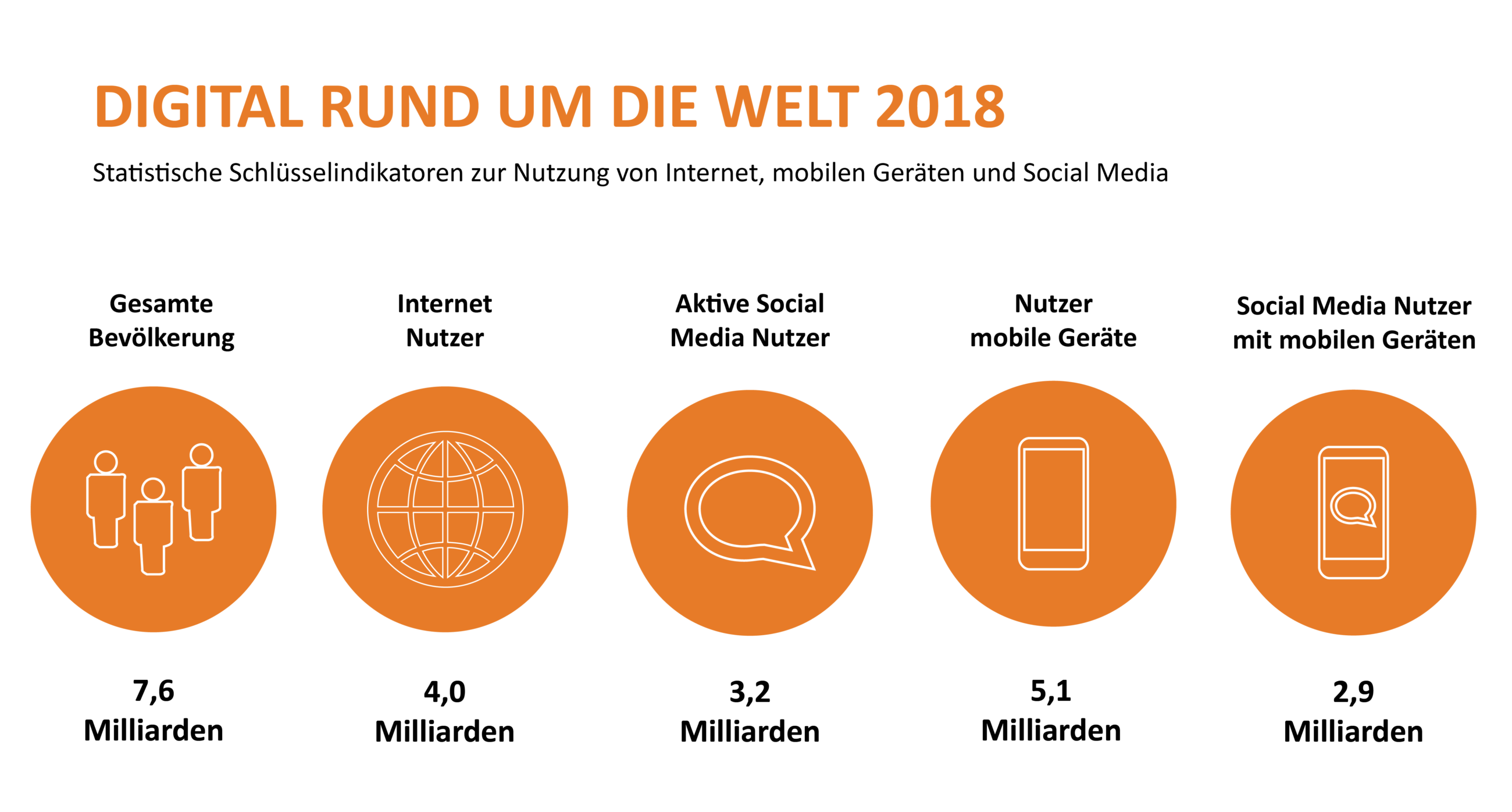
According to futurologists, by 2020 there will be three times as many connected devices worldwide (including vehicles, for instance) as there are people. Ninety percent of all data was generated within the last two years alone—and this trend is accelerating.
What does all of this have to do with bandwidth?
Without widespread, ultra-fast internet coverage, this development is simply not possible. Broadband internet access is considered the foundation for digital transformation. In reality, entire regions still have to manage without broadband internet, or people lack internet access altogether. Frequently, fiber-optic networks are being expanded, but direct connections to individual residential units are omitted due to cost constraints.
In this context, it should also be noted that countries do not always agree on the threshold defining “broadband.” Germany, along with the International Telecommunication Union and the World Bank, adheres to a data transfer rate exceeding 2038 kbps. The Austrian regulatory authority specifies a download rate of more than 144 kbps, whereas the US defines broadband as a minimum downstream of 4 Mbps and a minimum upstream of 1 Mbps. Until well into the 2000s, copper lines from telephone networks were used exclusively, but these are only suitable for bridging short distances and cannot handle large volumes of data.
The solution: fiber optics (also known as optical fiber) are now routed directly to consumers, guaranteeing no transmission loss over longer distances along with substantial bandwidth reserves. Here, fiber-optic cables are laid directly into the building or even into individual apartments. However, one must not overlook the so-called Last Mile, which can still cause bottlenecks if the final meters connecting to the premises consist of legacy copper wiring.
Back to basics: How much bandwidth do users actually need?
In many cases, bandwidth is not a critical issue; for standard web browsing, a bandwidth of 2 Mbps appears sufficient. The situation changes considerably when streaming video, where the download rate is naturally crucial. Here are some recommendations from the Austrian regulatory authority:
VoIP
0.1 Mbps download/upload (Skype)
Video
1 Mbps download (YouTube)
SD 3 Mbps download (Netflix)
HD 5 Mbps download (Netflix)
Ultra HD 25 Mbps download (Netflix)Music
0.32 Mbps download (Spotify)
With developments shifting toward Ultra HD, the demand for increased bandwidth will only continue to grow.
What role does net neutrality play in this context?
Net neutrality means delivering all data to the recipient on an equal basis and without specific manipulation. “Complete neutrality implies that all data is treated identically in every respect. In such an ‘egalitarian network,’ no distinction is made between services, nor are other criteria considered, such as platform, sender, or recipient.” To fulfill this principle and handle continuously increasing volumes of data equally, network capacity must be expanded continuously. Certain providers oppose net neutrality in order to transmit different types of data at varying quality levels. The risks here are significant: companies could pay internet service providers for preferential treatment of their content, ensuring, for example, that videos from a particular platform stream at higher speeds.
Under the Trump administration in June 2018, net neutrality—and with it, a foundational principle of the internet—was repealed in the US. What impact does this have on users? “On the one hand, providers can offer certain services free of data charges, a practice known as zero rating. On the other hand, they could prioritize specific data packets, meaning, for instance, that Netflix might load more smoothly than Amazon Prime” In the EU, net neutrality remains in effect, albeit with certain compromises. Zero ratings are not prohibited and are already widely implemented. For example, the Austrian mobile network operator A1 offers rate plans featuring various “A1 Free Stream” options. With the most expensive tier, users can stream on all popular music and video platforms without consuming their monthly data allowance. In lower-tier plans, video streaming platforms or social media channels are typically excluded. While these offers may seem appealing at first glance, a closer look raises questions about this methodology—one might even argue that unrestricted access to the internet is at stake.
The end of flat rates?
Zero-rating models are attractive only when data allowances are constrained and users must ration their usage. With an uncapped connection, whether a particular music streaming service is included in a zero-rating package becomes irrelevant. Furthermore, in most instances—as in our example above—free streaming is bundled only with higher-priced tiers, meaning users are ultimately paying for every bit of bandwidth anyway. While this likely does not signal the demise of flat rates, plans offering high or unlimited bandwidth will become increasingly expensive.
How pricing structures will evolve remains to be seen. However, there is no doubt that technologies such as 5G, autonomous driving, artificial intelligence, Ultra HD, and other future digital developments will drive higher bandwidth requirements across both private and, to an even greater extent, public environments.