2 million swipes, 28,000 streams, and increased broadband demands from consumers
Every year, social media manager Lori Lewis researches and publishes what happens on the internet in one minute. What exactly happens—and where—changes dramatically from year to year. Not least, Generation Z, new social media platforms, and streaming services are contributing to media consumption habits that change year after year, and many of us still need time to adjust. This makes bandwidth management, as enabled by IACBOX, all the more important.
In one minute, 157 babies are born worldwide, 14,000 passengers board an airplane, and 55 billion words are spoken. What do you usually manage to do in one minute? One minute is short, yet an incredible amount happens on the internet. According to an estimate, around 3.9 billion people worldwide used the internet in 2019. For 2021, it was forecast that the number of internet users would rise to around 4.14 billion. Clearly, a lot is happening.
According to data published by author Lora Lewis in 2021, Instagram users share 695,000 new Stories every minute. 69 million messages are sent via various messenger services such as WhatsApp or Facebook. E-commerce earns a full US$1.8 million per minute. And good old emails are not declining either: 197.6 million fly through the World Wide Web every minute. Everything indicates that humanity’s internet activity will continue to increase. Not only is the number of users with internet access rising worldwide, but new mobile communications standards are also making a major contribution.
The region with the most internet users worldwide is Asia—according to expert estimates, 2.7 billion people were online in 2021. Europe follows right after with an estimated 737 million; in the US, the number is only about half as high at around 348 million. The operators of the Speedtest.net website, by contrast, record connection speeds from around the world. Singapore leads the ranking. A hefty 197.97 Mbit/s downstream is measured here on average; upstream is 94.73 Mbit/s. In Europe, Denmark is listed in fourth place with 170.38 Mbit/s downstream and 94.14 Mbit/s upstream. Monaco and Spain are also among the top 10, with residents surfing the World Wide Web at an average of around 158 and 136 Mbit/s (downstream), respectively. Far behind, in 46th place with 72 Mbit/s downstream, is Germany; Austria is even further back in 55th place with 65 Mbit/s downstream.
Swiping, snapping & influence me: TikToks on the rise
Not long ago, many people still mocked the Chinese social media platform TikTok, and it was not expected to survive for long. But where mainly teenagers once showcased their dance and karaoke skills, a serious giant has now emerged. The motto is “user-generated content”; many advertisers have jumped on the new advertising formats and use influencers with tens of thousands of subscribers to showcase their products effectively. The platform has 800 million users, and on average the app is opened about 8 times a day. 69% of users are under 24 and spend just under an hour on TikTok every day. TikTok’s success factor is likely the combination of fast-paced communication and relaxed, carefree content.
What else? Twitch is also on the rise. The gamer platform is currently shaking up the sports market. What may sound confusing to anyone over 35 has the potential to become huge: young people watch other young people play on the computer and chat along. Real Madrid and Arsenal have already joined in, because young audiences watch hours-long streams on Twitch. We are curious to see how Amazon’s subsidiary will develop further.
Brave new world?
While the internet is nothing new, COVID pushed us into a headlong rush—into the World Wide Web. A parallel world without pandemics. A world in which we can be anonymous to a certain extent, change our appearance as we wish with beauty filters, and post photos of ourselves that match our desired look. Studies have shown that the use of beauty filters can go so far as to disrupt users’ body perception. Since 2018, the phenomenon has had a name: selfie or Snapchat dysmorphia.
Mark Zuckerberg, Facebook’s CEO, wants to capitalize on the trend toward this parallel world and last year simply renamed Facebook to Meta. The metaverse, as he calls it, is said to be the future of the internet: a fusion of the real and digital worlds in which users meet as avatars to play, communicate, learn, shop, and work. Have you not sometimes dreamed of being able to send a clone of yourself to school or work?
But how is that supposed to work? Meta plans to hire 10,000 new employees in Europe alone over the next five years. Roughly the same number of developers at the company are already working on the metaverse. The COVID pandemic was by no means the peak, but rather a galloping acceleration of these parallel worlds.
Bandwidth bottlenecks ahead!
But what about broadband development in the real world—can it keep up? Since COVID, massive growth rates have been observed in average private bandwidth usage. Experts assume that both working from home and virtual learning will remain in the coming years. In addition, consumers’ expectations of the user experience continue to rise. Service providers are responding with new offerings that enable augmented reality. Others, in turn, are focusing on new products to meet the emerging gaming sector and see new revenue sources in “LLD” (Low-Latency DOCSIS). Virtualized software in the cloud will need to use new technologies in the future to process data faster, such as automated network management systems. The goal is to resolve issues before users notice any negative impact.
In the real world, however, this will not always succeed—and certainly not everywhere. It is no different with oil, gas, electricity, or firewood. As soon as everyone needs more of it, there is not enough. In fact, we have already considered the bandwidth bottleneck: https://www.iacbox.com/blog/nadeloehr-bandbreite/ The traffic jam on the data highway is, so to speak, pre-programmed. EU countries—and least of all Germany or Austria—cannot boast particularly rapid fiber rollout, especially not in rural regions.
In the WiFi network, at least throughput is encouraging, but ultimately it also depends on the internet connection. IACBOX is happy to take on the demanding job of bandwidth management efficiently, regardless of the internet connection you have. IACBOX will make the best of it and find the smartest way to control data traffic and manage the available bandwidth in the right proportion to achieve the best possible user experience. No other system offers so many flexible options in a single solution, is reliable and stable, and offers excellent value for money.
IACBOX offers:
› Dynamic bandwidth management per user, incl. guaranteed bandwidth
› Ticket-based use or autologin, paid or free
› Individual or group ticket design by time, data volume, and bandwidth.
In the coming years, bandwidth will therefore be increased and work will also continue on comprehensive coverage—especially in rural areas or regions that are not yet well developed for tourism, there are still significant gaps in this respect. While legislators in various countries are working to drive broadband coverage and fiber-based services forward, and in some cases this is also achieved with publicly granted funding and subsidies, nationwide coverage is progressing much more slowly than one would wish. Even though policymakers are fully committed to digitalization with their funding measures, in many non-tourist regions the message is still: please wait. This makes centralized broadband management, as provided by IACBOX, all the more important.
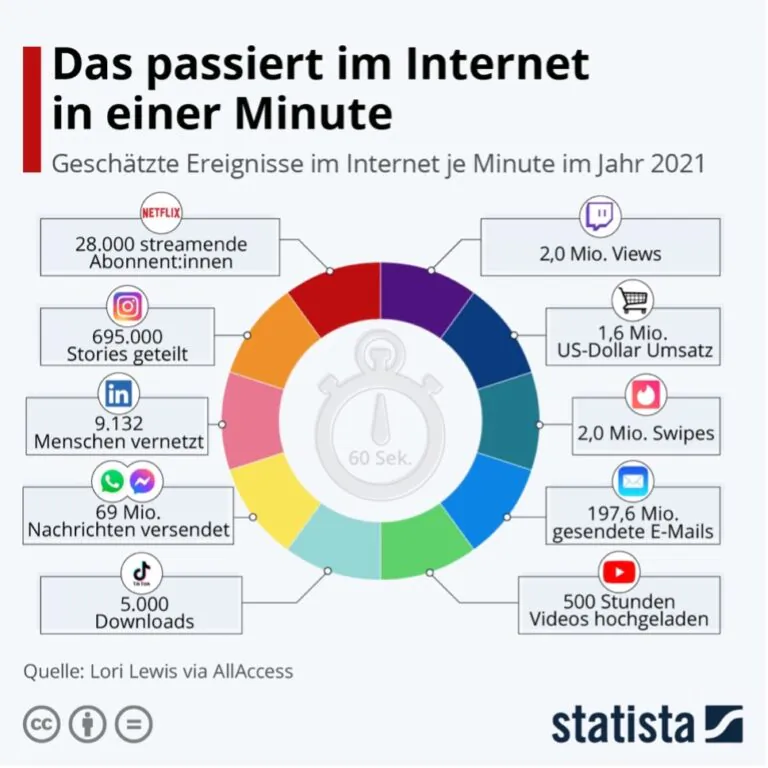
Source: Statista
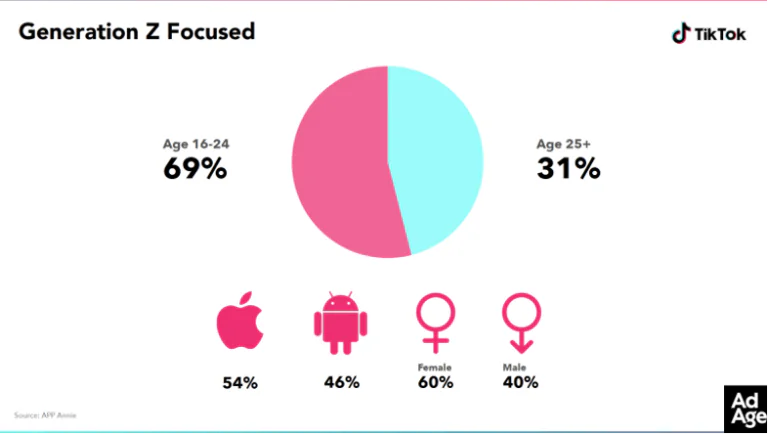
Source: TikTok